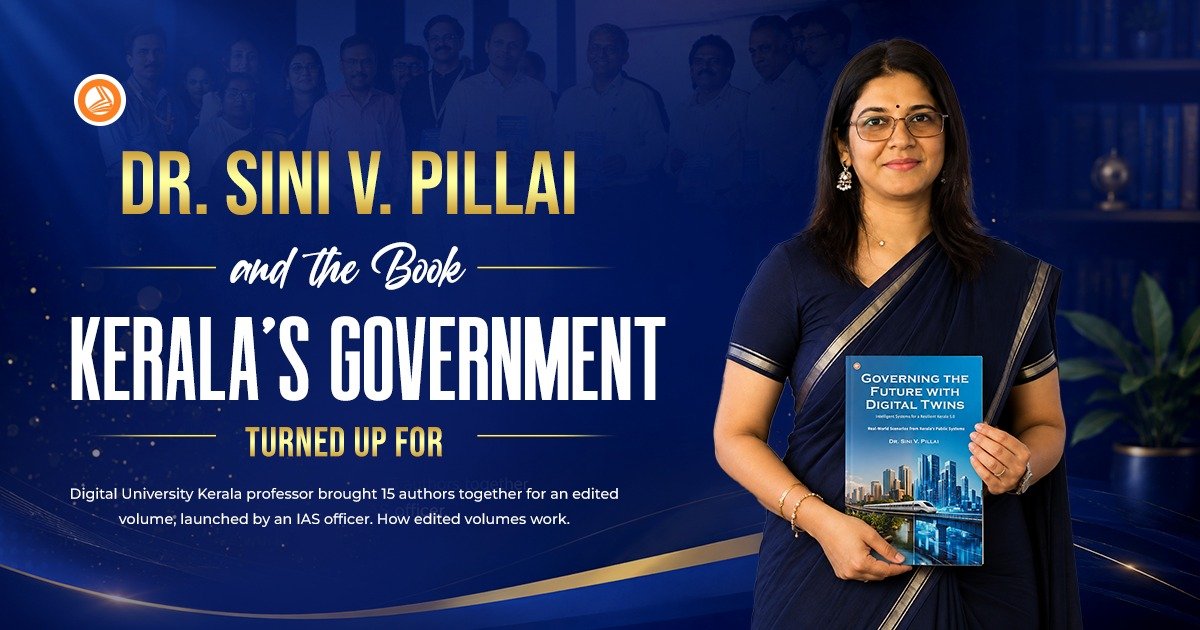
An Additional Chief Secretary is holding one end of a book. Dr. Sini V. Pillai is holding the other. In the room are two more IAS officers, a Vice Chancellor, faculty colleagues and a hall of PG eGovernance students.
The book is months of work and fifteen contributing authors. It is also — and this is the part worth noticing — not something she wrote by herself.
If you are a professional who has carried a book at the back of your mind for years, this is the photograph you are actually imagining. Not royalties. Not an Amazon rank. This room.
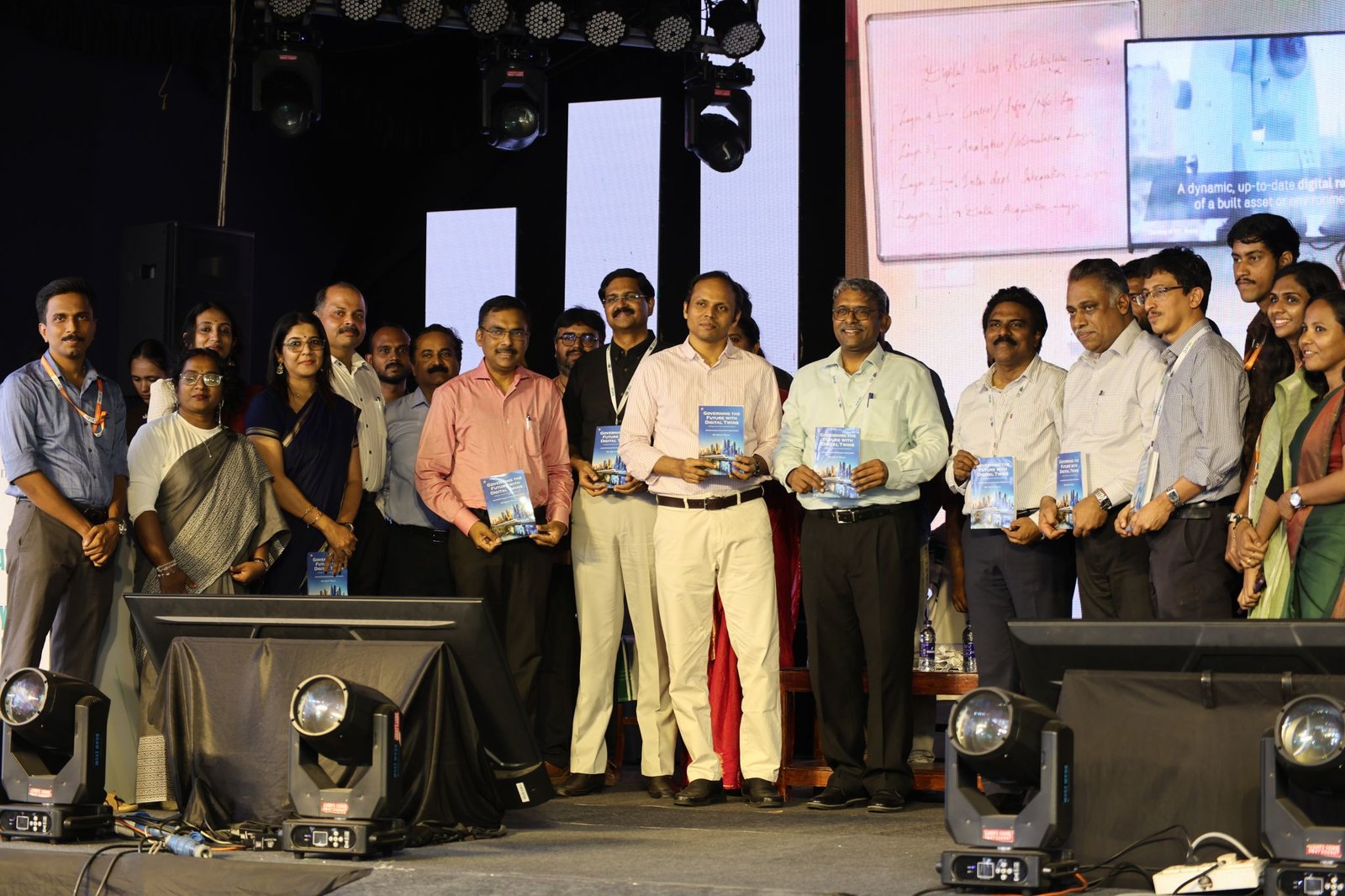
The handover, at the 5th Foundation Day celebrations of Digital University Kerala.
The other publication
📄 A Paper and a Book Are Not the Same Instrument
Dr. Pillai publishes the ordinary academic way too. In August 2026 a paper of hers was accepted by Industrial and Commercial Training, a Q2 Scopus journal, after what she described on LinkedIn as a year-long journey with three rounds of intensive revisions. She co-wrote it with one of her own MBA students.
A real achievement — and it will sit behind a paywall, read by specialists. A book is a different instrument. It is handed over. It enters a library catalogue and a reading list. It can be given to a department secretary, a conference chair or a new batch of students. Neither replaces the other. Only one puts you in a room with the people who run the systems you study.
The part nobody explains
👥 She Did Not Write Two Hundred Pages Alone
The fact that changes the maths for most professionals, and almost nobody in Indian publishing says it out loud: Dr. Pillai is the editor of this volume, not its sole author. Fifteen contributing authors wrote alongside her.
An edited volume is a real book. It carries an ISBN, it is listed and stocked like any other title, and it goes on a CV as a book. What it does not require is one person producing a full draft alone in the evenings for a year. That is why a professional with a full calendar can finish one.
●Decide what the book argues
Before anyone is approached, the frame has to exist. Hers: digital twins are not a technical curiosity but a governance instrument for systems under stress.
●Choose the fifteen
Contributors are chosen for domains one person cannot cover credibly alone — water, health, mobility, energy, environment, infrastructure.
●Write the brief, not the chapters
Every contributor gets the same scenario structure. This is what separates a book from a stapled pile of unrelated papers.
●Edit for one voice
The editor’s real labour. Fifteen writing styles become one argument that reads continuously start to finish.
●Hand production to a publisher
ISBN, interior, cover, proofs, retail listing. None of it should eat the editor’s evenings.
●Release it in a room that matters
A book that is merely listed is a file. One handed over in front of the right audience is a milestone.
That is a few months of coordination rather than a year of solitary writing. Our guide on why doctors, CAs and consultants are writing books covers the same decision from the practitioner’s side.
The book
📘 Governing the Future With Digital Twins
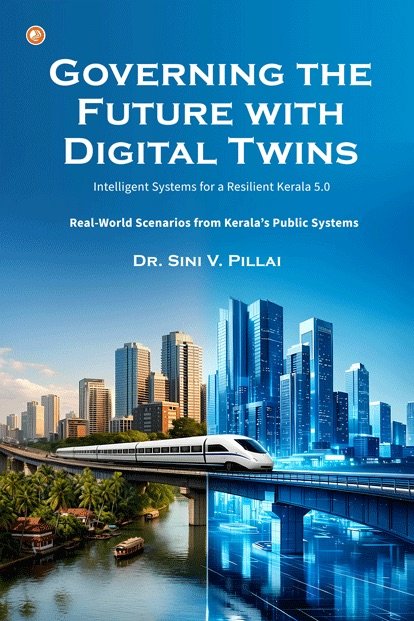
Edited by Dr. Sini V. Pillai
Governing the Future with Digital Twins
Intelligent Systems for a Resilient Kerala 5.0 — Real-World Scenarios from Kerala’s Public Systems
The book treats digital twins not as technical artefacts but as governance instruments — tools for running public systems under real uncertainty. Climate risk, ageing infrastructure, urban congestion, public health pressure. Kerala appears not as a case study but as a living laboratory, which makes the lessons portable.
ISBN 978-93-7426-920-6 · Paperback and eBook · 6 x 9 in · English · Academic
The scenarios span urban systems, energy, mobility, water, public health, environment and public services — the domains where a governance failure is felt immediately.
Production
🛠 What OrangeBooks Handled
A multi-contributor title has production problems a single-author book never has. Fifteen people submit in fifteen formats with fifteen reference habits, and the result has to read as one book.
🏷 ISBN and registration
Registered and lodged properly, so libraries and catalogues treat it as a book rather than a document.
📄 One interior, fifteen sources
A single 6x9 academic layout with consistent running heads, headings and references across every chapter.
📱 Paperback and eBook
Print for the launch and the shelf; Kindle and Google Play so a researcher anywhere can cite it.
🚚 National retail plus direct
Amazon, Flipkart, Google Play Books and the Wissen Bookstore, from one production file.
✅ Rights — every right stays with the editor and her contributors. OrangeBooks takes no ownership, and royalties are paid in full.
The launch
🎓 The Room It Was Released In
Released by Rajan N Khobragade IAS, Additional Chief Secretary, Health and Family Welfare, in the presence of Seeram Sambasiva Rao IAS, Dr. Santhosh Babu IAS and Vice Chancellor Saji Gopinath, with faculty colleagues and PG eGovernance students — at the 5th Foundation Day celebrations of Digital University Kerala.
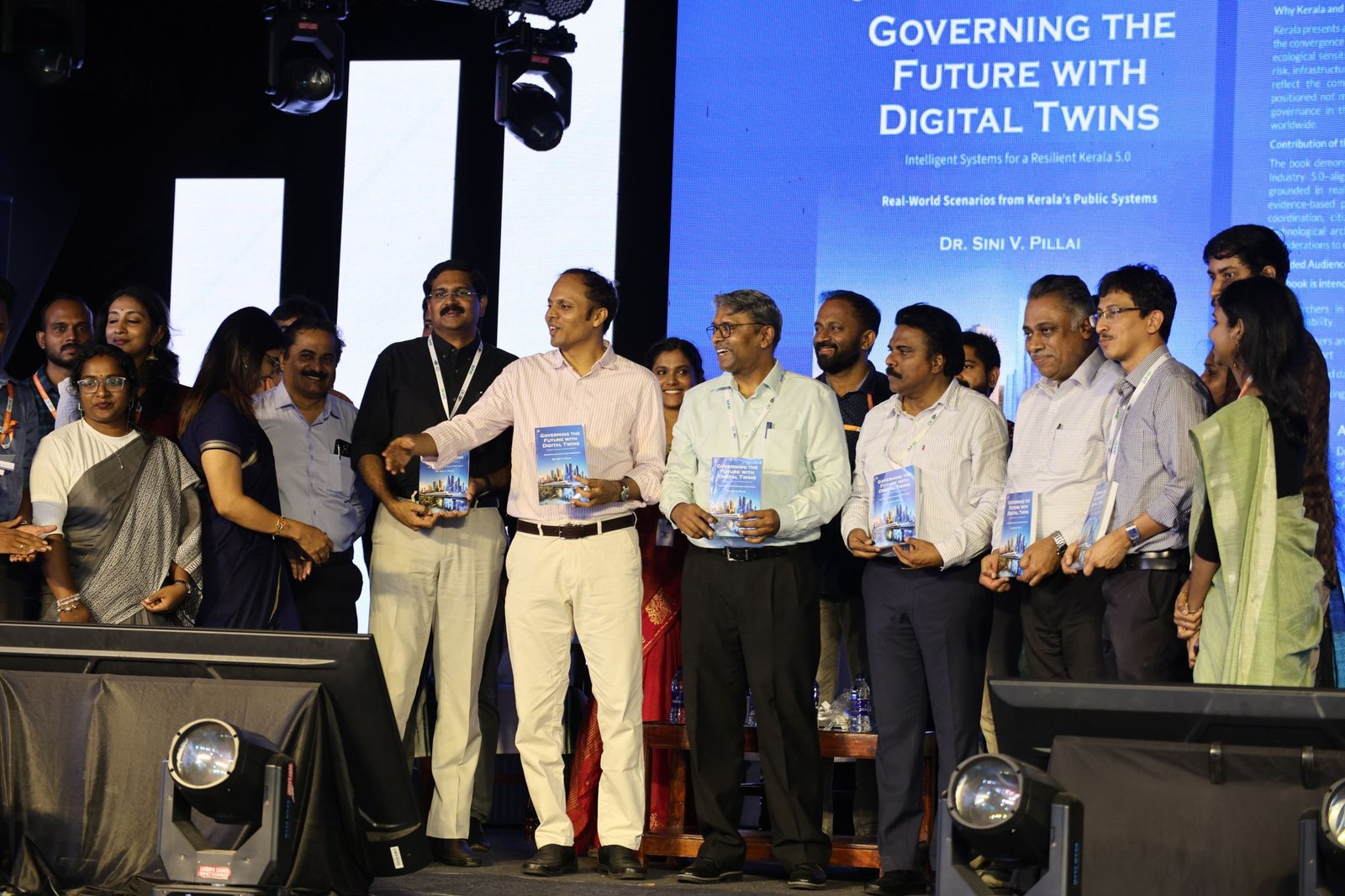
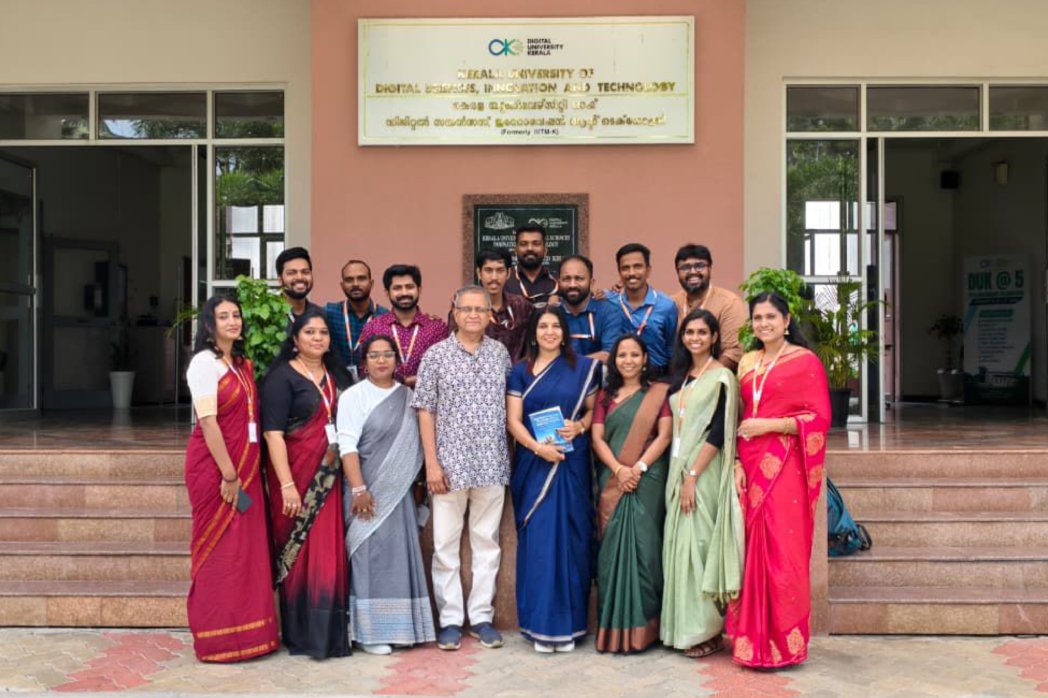
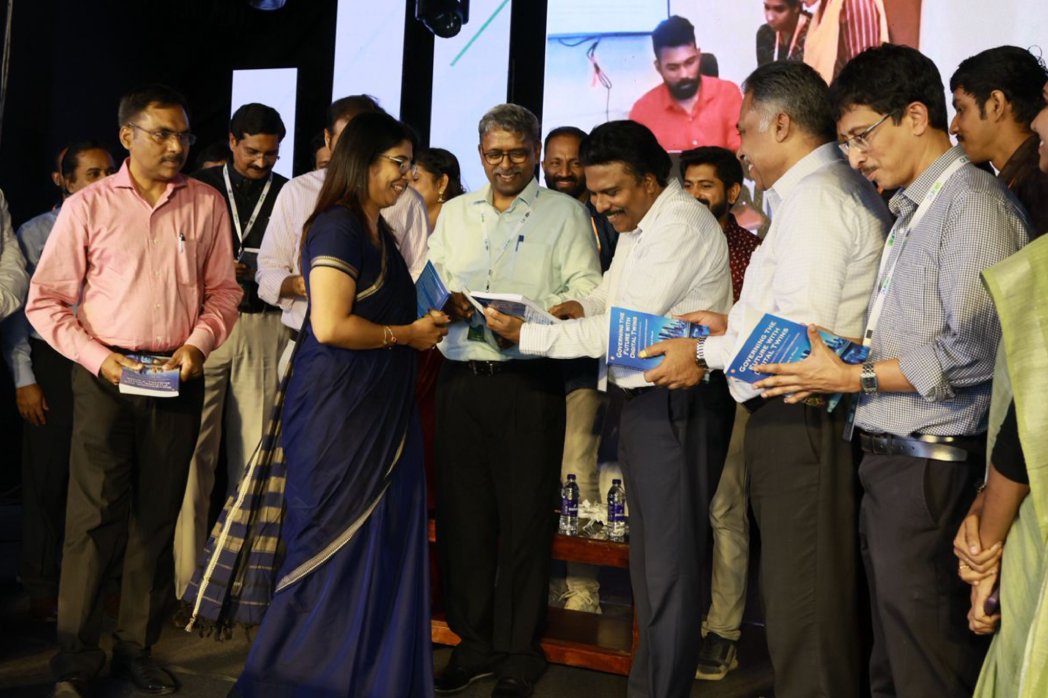
Scenes from the release, Digital University Kerala.
In the author’s words
“The book examines how Digital Twin technologies, AI-enabled systems, and data-driven governance frameworks can reshape public administration and enhance resilience within public systems.”
Dr. Sini V. Pillai, announcing the release
Why it is worth it
📈 What a Book Does That a Paper Cannot
What that takes: a frame worth defending, people whose work you respect enough to invite, and a publisher who takes production off your desk. Not a free year — Dr. Pillai did this while teaching, chairing placements and finishing a Scopus paper. Start here: how ISBN registration works in India, and where an academic title genuinely sells.
For academics and institutions
Have an edited volume in you? We handle everything after the last chapter lands.
ISBN, academic interiors, cover, print-on-demand and national retail. Over 3,100 authors published, every right retained.
More author stories
📚 Yugal Prem Das
An engineer turned spiritual coach whose three books are now in a university curriculum.
💼 CA Kumar Anand
A CFO with 18 years of global leadership, on defining success differently.
🥽 Dr. Rakesh Joshi
An eye surgeon, two books on Retinitis Pigmentosa in English and Hindi, and a TEDx talk.